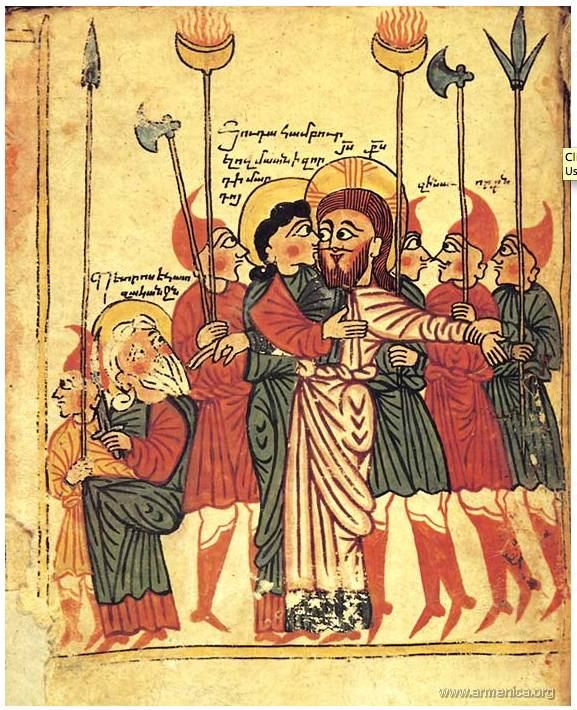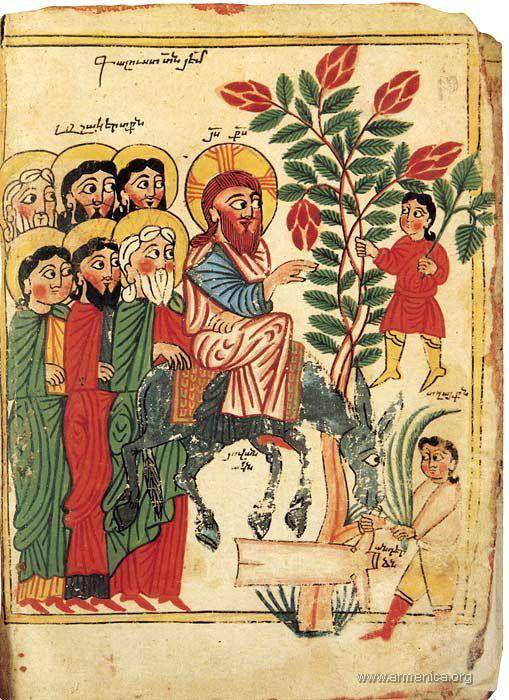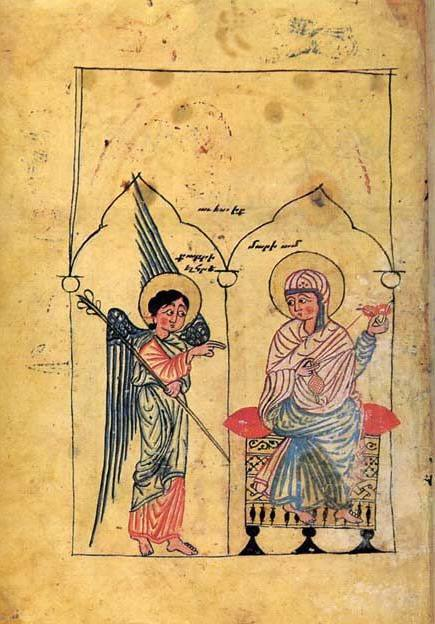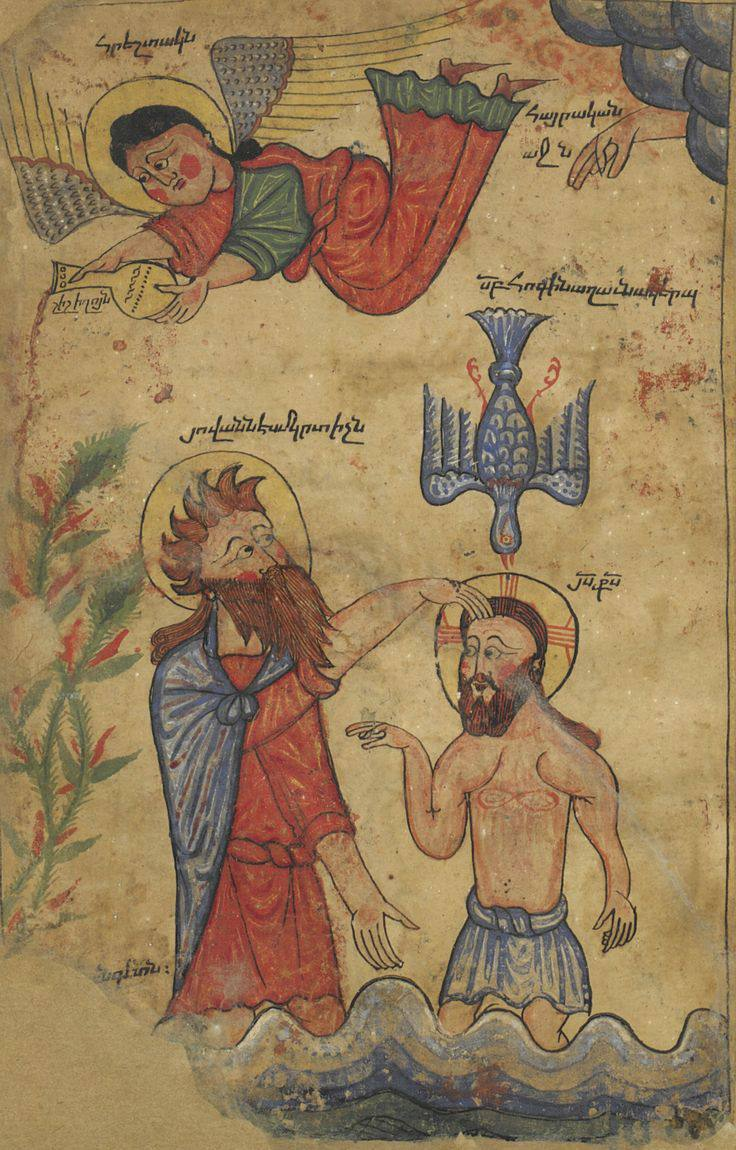


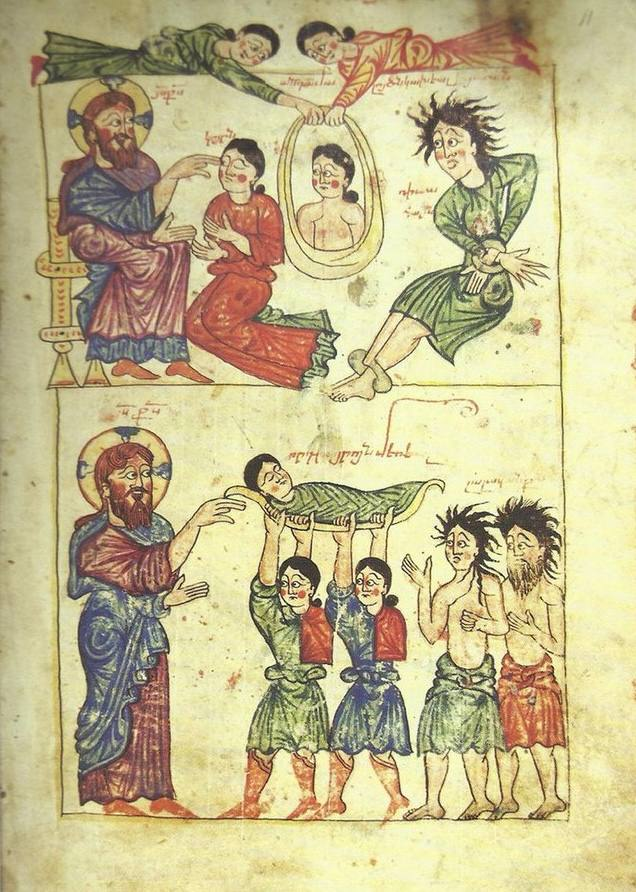
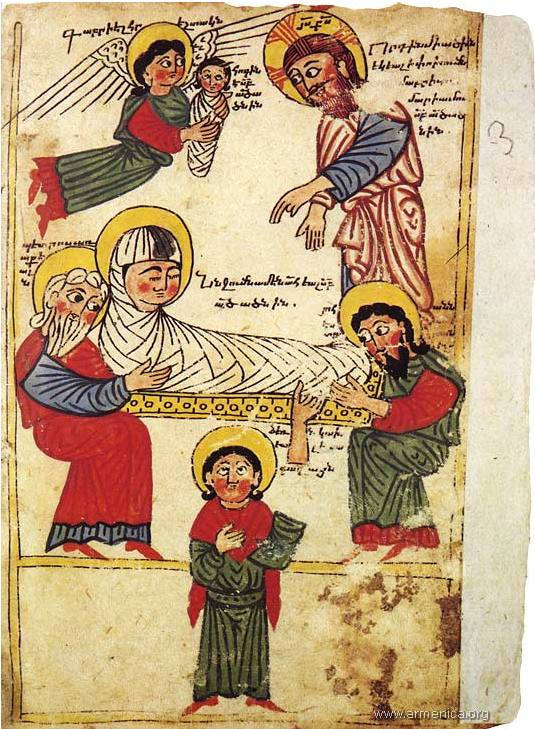
The first miniatures of the Vaspurakan manuscript school began to appear as early as the 10th century, but these works have practically not survived. The main period of activity is considered to be the 13th–18th centuries.
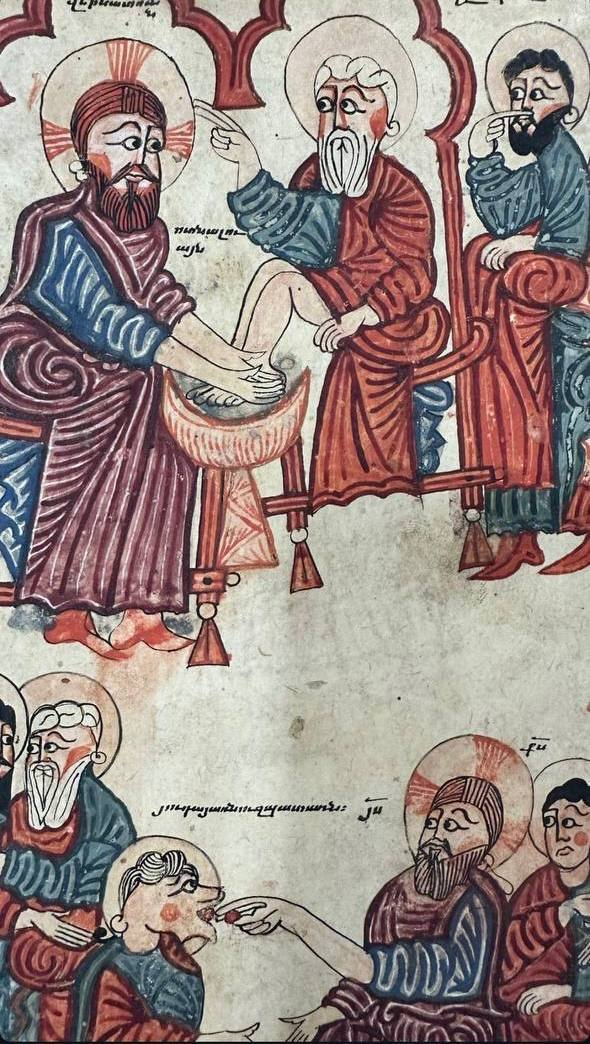
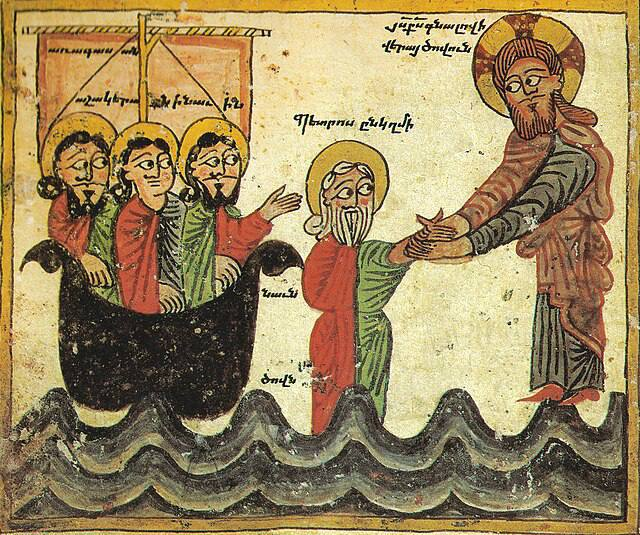
The Vaspurakan school differs from other schools by its fully formed artistic style, which is characterized by simplicity and contrast.
Another distinctive feature of the Vaspurakan tradition is the absence of a colored background. Gold came into Armenian miniature painting from Byzantium: the Cilician school adopted from it the use of background and gold leaf, as well as highly detailed images. In Vaspurakan, however, the artists worked on an empty (unpainted) background, because the centers there did not have the opportunity to acquire gold for manuscripts.
It should be noted that Vaspurakan was isolated from all others, thanks to which the manuscript scribes were able to preserve their traditions.
This school owns one of the earliest illustrated manuscripts of Armenian medieval miniature painting — the Gospel of Mlk’e.
It was created in the second half of the 9th century for a prince of the Artsruni family and was presented as a gift to the Varag Monastery by King Gagik and Queen Mlk’e.
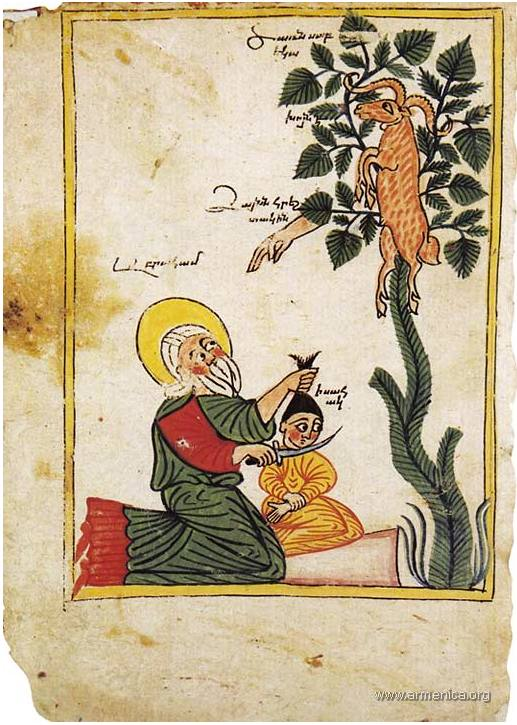
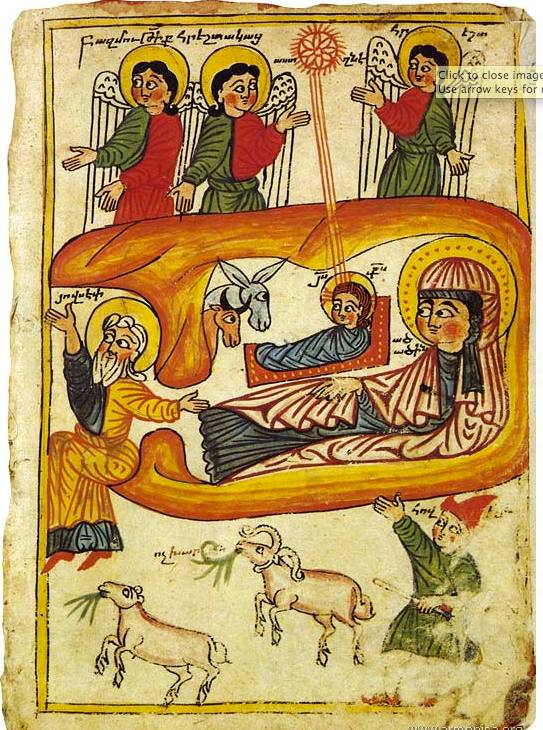
The structure of an Armenian medieval manuscript was formed as follows: the first pages were devoted to the Letter of Eusebius and the Canon Tables — the khorans. They were decorated with ornamental patterns. Next came a gathering (quire) of full-page miniatures, the composition of which varied depending on the time and place of creation of the manuscript. As a rule, the scenes included the Annunciation, Nativity, Baptism, Crucifixion, Transfiguration, and others. After them followed the text of the Gospels, and before each Gospel there was an image of the evangelist. In later miniatures, specially decorated initial letters, vignettes, and marginal illustrations appeared.
In the illustrated manuscripts of Vaspurakan, the miniatures are placed at the very beginning, and after the Gospel scenes come the khorans.
The pages of the manuscript contain brief explanatory inscriptions, which became an integral part of Vaspurakan miniature painting. These inscriptions are placed directly inside the composition itself. Such explanations are related to the interpretation of the painted scene and the characters depicted. In other Armenian schools this is not so widespread and is not obligatory.