


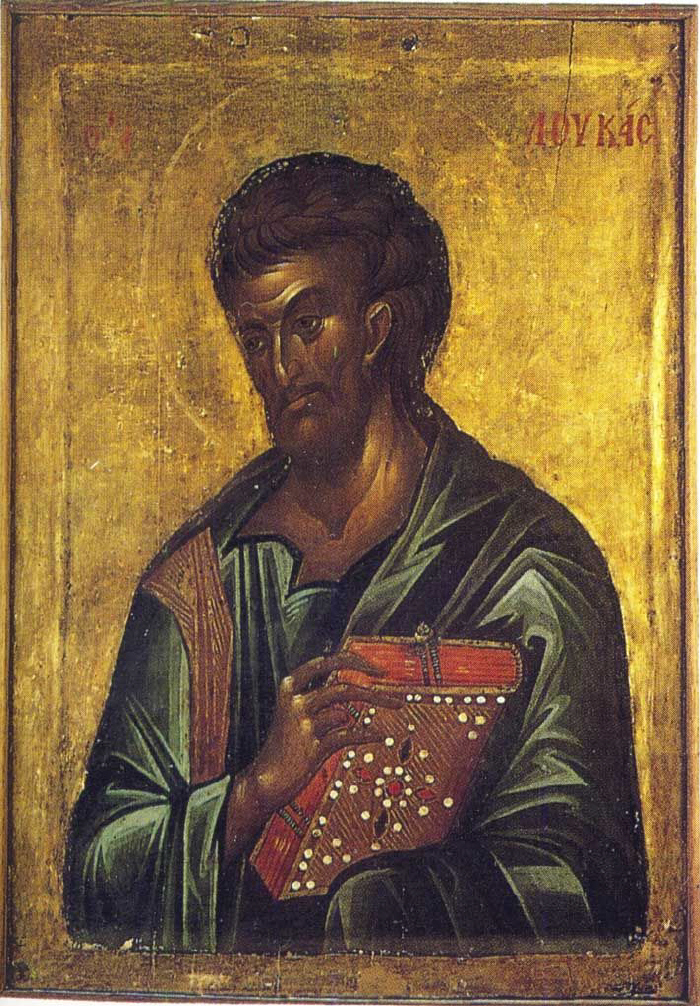

Gospel (Greek εὐαγγέλιον “good news”; from εὖ “good, blessing” + ἀγγελία “news, message”) — in Christianity, the message of the coming of the Kingdom of God and the salvation of the human race, proclaimed by Jesus Christ and the apostles. In the narrow sense, the Gospel refers to the narratives about the birth, earthly ministry, miracles, crucifixion, resurrection, and ascension of Jesus Christ, which by the 2nd century took the form of four canonical books — the Gospels according to the evangelists Matthew, Mark, Luke, and John.
The term “Gospel” is used in the Gospel of Matthew (Mt. 4:23, Mt. 9:35, Mt. 24:14, Mt. 26:13) and in the Gospel of Mark (Mk. 1:14, Mk. 13:10, Mk. 14:9, Mk. 16:15), as well as in other books of the New Testament, not in the meaning of “book,” which was introduced later, but in the meaning of “good news,” for example:
And He said to them: Go into all the world and preach the Gospel to every creature.
— (Mk. 16:15)
The Gospel Canon
The Gospels are part of the books of the New Testament. The earliest source mentioning the four canonical Gospels is the work of Irenaeus of Lyons “Against Heresies” (Refutation and Overthrow of Knowledge Falsely So Called). In this work, the four Gospels are named by their authors: Matthew, Mark, Luke, and John.
These four Gospels later became part of the canonical books of the New Testament Bible, which was affirmed by councils in the Orthodox Church. The composition of the canonical books of the Bible is determined by a set of rules in the Orthodox Church: the 85th Apostolic Canon (4th century), the 60th rule of the Council of Laodicea (364), the 39th Festal Letter of Athanasius the Great (4th century), the Verses of Saint Gregory the Theologian (4th century), the Verses of Saint Amphilochius of Iconium (4th century), the 33rd rule of the Council of Carthage.
According to Donald Guthrie, the texts were originally anonymous, and the authorship of each Gospel was agreed upon only at the beginning of the second century. In the 18th century, the attribution of authorship was first questioned.
The first three texts contain many parallel passages and have been called synoptic (from Greek σύνοψις — synopsis) since the 18th century, after Johann Jakob Griesbach published them in 1776 in the form of a Synopsis, that is, in parallel columns. The Gospel of John differs significantly from the synoptic Gospels both in composition and in content. It was written several decades later than the books of the other evangelists in order to supplement them. The text of John the Theologian presents a theological description of Jesus Christ as the eternal Word and the unique Savior of humanity.
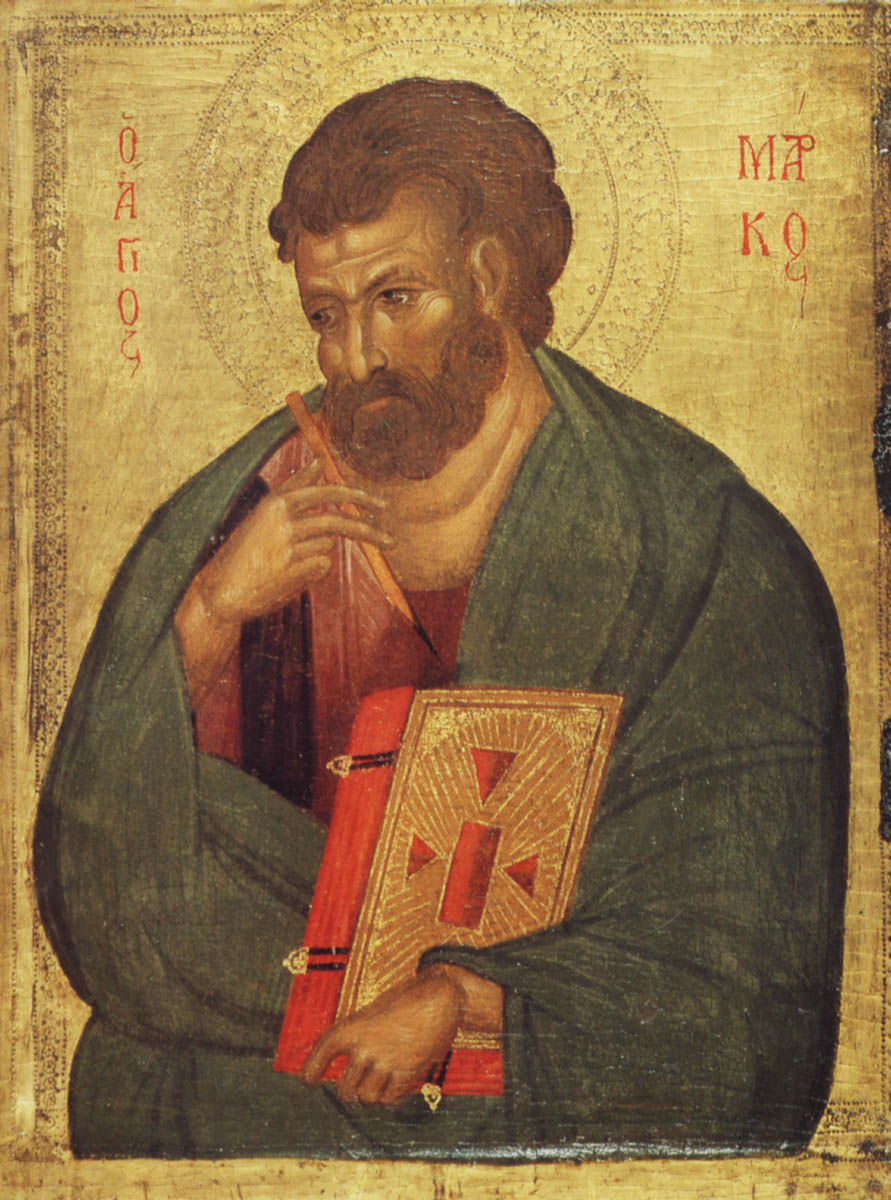
From the end of the 2nd century AD, to indicate that the differences between the Gospels do not violate the unity of Christian doctrine, the holy martyr Irenaeus of Lyons speaks of them as one Gospel given to Christians in four forms. The Gospel according to John is compared to an eagle, because with the special loftiness of its thoughts it soars high in the sky like an eagle; the Gospel according to Luke — to a calf, since it signifies the “sacerdotal and priestly dignity” of Christ the Word; the Gospel according to Matthew — to a man, as it “depicts His appearance as a man”; and the Gospel according to Mark — to a lion, symbolizing the “effectiveness, dominion, and royal power” of Christ the Son of God, that is, in analogy with the tetramorph of Ezekiel.
Content
The Gospels contain descriptions of the birth and life of Jesus Christ, His death, miraculous resurrection and ascension, as well as His preaching, teachings, and parables.
Some events are mentioned only in certain Gospels and not in others.
The Synoptic Gospels became the source of many plots, quotations, and ideas for European social culture in subsequent centuries. Widely known are the Nativity of the infant Jesus Christ, the Sermon on the Mount and the Beatitudes, the Transfiguration, the Last Supper, the Resurrection, and the Ascension. The main events in the life of Christ mentioned in the Gospels gradually began to be celebrated as church feasts by the peoples who accepted Christianity.
The Oldest Manuscripts
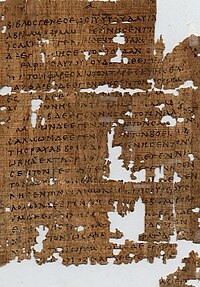
Papyrus of Matthew (dated to the year 250)
The oldest known surviving manuscripts of the Gospel texts date from 150–250 AD. In 2015, a preliminary report was published about the discovery, within a glued Egyptian funerary mask made of papyrus, of a small fragment of the Gospel of Mark dated to before 90 AD. The oldest complete copy of the canonical fourfold Gospel (in the Codex Sinaiticus) dates to the 4th century.
Authorship

Gospel, 1644, Vilna
According to most scholars, the authors of the Gospels are not reliably known. The traditional attribution of the Gospel texts to Matthew, Mark, Luke, and John was carried out in the 2nd century, and in the 18th century the reliability of the information about authorship was called into question. At the Second Vatican Council, during the discussion of the “Constitution on Divine Revelation” (Dei Verbum), authorship of the Gospels was explicitly stated:
 |
The Church has always and everywhere held and continues to hold that the four Gospels have apostolic origin. For what the Apostles preached by command of Christ, they themselves and their associates afterwards, under the inspiration of the Holy Spirit, handed down to us in writing as the foundation of faith, that is, the Fourfold Gospel according to Matthew, Mark, Luke, and John. |  |
Non-Canonical Gospels
There are also texts that are not recognized by historical Christian churches as true. These are the so-called apocrypha. The Church’s rejection of these texts is explained by doubts about their authenticity and the reliability of the events described in them.
Composition of the Gospels
The composition of the books of the New Testament (which includes the Gospels) was fixed by the Church in the 4th century; however, the structure of four Gospels (synoptic and that of John) was recognized by Christians already by the end of the 2nd century. Later, church figures (holy fathers and teachers of the Church) wrote commentaries on the Gospels. Among the commentators on the Gospels, one may note Saint John Chrysostom, who lived in the 4th century, as well as Blessed Theophylact of Bulgaria, who lived in the 11th century.

Armenian manuscript of the Gospel, 1269
Canonical Gospels
- Gospel According to Matthew
- Gospel According to Mark
- Gospel According to Luke
- Gospel According to John
Apocryphal Gospels
- Gospel of the Egyptians
- Gospel of the Essenes
- Gospel of the Hebrews
- Gospel of the Ebionites
- Gospel of Eve
- Gospel of Peter
- Gospel of Mary
- Gospel of Nicodemus
- Gospel of Philip
- Gospel of Judas
- Gospel of Thomas
- Oxyrhynchus Papyrus (non-canonical fragment from the synoptics)
- Egerton Papyrus (non-canonical fragment from the Gospel of John)
- Secret Gospel of Mark
Pseudo-apocrypha
- Gospel of Barnabas (medieval mystification written from Muslim positions)
- Tibetan Gospel
- Infancy Gospels
- Infancy Gospel of Thomas
- Protoevangelium of James
- Gospel of Pseudo-Matthew
- Arabic Infancy Gospel of the Savior
The Gospel in Divine Services
The procession with the Gospel and its reading is one of the most solemn moments of Orthodox divine service. According to the commandment of Jesus Christ “preach the Gospel to every creature” (Mk. 16:15), it is read during Matins, All-Night Vigil, Divine Liturgy, molebens at some church sacraments and services. For this purpose, a special liturgical (altar or service) Gospel is used. In the Russian Orthodox Church, it is written in Church Slavonic and divided not only into chapters and verses but also into meaningful thematic pericopes (zachala). The cover (riza) — the binding of such a Gospel — is richly decorated with engraved metal iconographic images of the risen Christ (in the center) with the evangelists turned toward Him (in the corners). The liturgical Gospel with a bookmark embroidered with golden threads in brocade is kept in the church in the altar on the Holy Table above the antimension (which is consecrated exclusively by a bishop). Despite this, the altar Gospel is not consecrated by any special church rite, since the text of the Gospel itself is sacred. Only its cover — the richly decorated binding — may be consecrated.
During the ordination to the episcopate, the bishops place the open text of this liturgical Gospel on the head of the candidate, in the image that Christ Himself, by His Gospel, ordains the priest to the highest church rank.
The service Gospel is a liturgical Gospel of reduced size (for convenience in performing various services).