


The book is also known as the "Apocalypse" (ancient Greek Ἀποκάλυψις Ἰωάννου, Latin Apocalypsis Ioannis) — the last book of the New Testament in the Bible. It is the only apocalyptic book in the New Testament and the second in the biblical canon overall, alongside the Old Testament Book of the Prophet Daniel. Church tradition names its author as John the Theologian, the author of the similarly named Gospel, though the majority of modern biblical scholars disagree with this. It is traditionally believed that the book was written at the end of the 1st century.
The book describes events preceding the Second Coming of Jesus Christ to earth, which, according to previously recorded biblical prophecies, will be accompanied by numerous cataclysms and calamities. Therefore, the word “apocalypse” is often used as a synonym for the end of the world or for a planetary-scale catastrophe. From this word derive the terms apocalyptic and post-apocalyptic, denoting genres of science fiction in which the action takes place in a world during or after some global catastrophe, respectively. The book also describes the Second Coming of Jesus Christ and the events following it.
Chapters
Title and Genre
The book is named after its first line: “ἀποκάλυψις ἰησοῦ χριστοῦ, ἣν ἔδωκεν αὐτῶ ὁ θεός, δεῖξαι τοῖς δούλοις αὐτοῦ ἃ δεῖ γενέσθαι ἐν τάχει” (1:1, “The Revelation of Jesus Christ, which God gave Him to show His servants what must soon take place”). Although the revelation was given to Jesus Christ, tradition has it that the book is called “The Revelation of John the Theologian.” The Greek word for “revelation” or “unveiling” (ancient Greek — “ἀποκάλυψις,” apocalypse), due to the specific content of the work, today is primarily associated with catastrophes.
Scholars classify the Revelation of John the Theologian as belonging to the genres of apocalyptic literature, prophecy, and epistle. A consensus regarding the book’s classification as apocalyptic literature emerged in the 20th century. American biblical scholar John Collins proposed the classic definition of the genre as literature of revelation in which “a supernatural being discloses to humans a transcendent reality, the temporality of existence, and an expected eschatological salvation…” “Revelation” is the only New Testament apocalyptic book included in the canon. It is the second apocalyptic book in the biblical canon as a whole, alongside the Old Testament Book of the Prophet Daniel. Individual apocalyptic motifs are also present in the Gospels and Epistles. “Revelation” is likely the first recorded work of this genre, after which others were created: the Apocalypse of Peter, the “Shepherd” of Hermas, and others. Apocalyptic literature, according to historian Irina Sventsitskaya, was intended for reading aloud, during which the reader emphasized mysterious and frightening images with intonation. David Barr holds the same view, adding that the text was used during the sacrament of the Eucharist.
Classifying the book as prophecy is difficult due to the vagueness of the concept. Grant Osborne, speaking about the main difference between the genre of prophecy and apocalyptic literature, considers the nature of the narrative. Prophecy is a more optimistic genre, as it leaves hope for redemption in the present for future salvation, whereas apocalypse is more pessimistic. In it, all hope lies in the future, not the present. John himself called his activity prophetic. John was to “prophesy about many peoples and nations and tongues and kings” (10:11).
The Revelation of John the Theologian is also an epistle. The author himself considered it so, using forms such as “John to the seven churches that are in Asia…” (1:4). Chapters 2 and 3 are also direct messages to specific churches in Asia Minor. Biblical scholar Eduard Ihnat believes that the author follows the ancient tradition of clothing divine revelations in the form of an epistle; this serves the purpose of facilitating the reading of the book during services.
Authorship

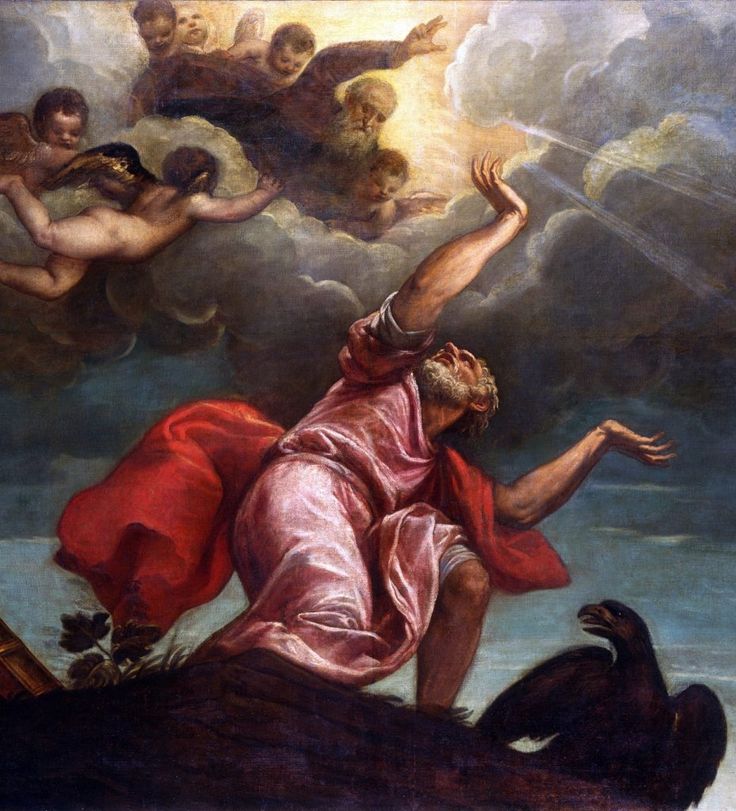
“John the Theologian in Silence,” 1679. Winter Palace
The author calls himself John: “John to the seven churches that are in Asia” (1:4, as well as 1:1, 9; 22:8). Judging by the fact that the addressee did not need to further identify himself, the churches knew John well, and the author was well acquainted with what was happening in all seven Asia Minor churches and was an authoritative figure for these communities. In Rev. 1:1 he calls himself a “servant” whose mission is to convey to people “what must soon take place.” He mentions that he was on the island of Patmos in the Aegean Sea when he received the vision (1:9). John (ancient Greek Ἰωάννης) was a fairly common name among ancient Jews, so to distinguish him from namesakes, he is called John of Patmos. However, whether John of Patmos and the apostle John are the same person is a controversial question dating back to antiquity.
Ultimately, church tradition identified the author of the “Revelation” with John the Theologian, a disciple of Jesus and the author of the similarly named Gospel, which allowed the book to be included in the canon. The author himself never identifies himself with the apostle and does not speak of his universal fame in the Christian world, but early Christian tradition as a whole is united on this theory. The majority of ancient writers testified to the apostolic origin of the Revelation. Such was the opinion of prominent early Church theologians Justin Martyr, Clement of Alexandria, Tertullian, Irenaeus of Lyons (who was acquainted with Polycarp, bishop of Smyrna, who in turn, according to Irenaeus, was personally acquainted with John the Theologian). However, even in antiquity, authorship was called into question. The most famous opinion was expressed by Dionysius of Alexandria (mid-3rd century), who pointed out the difference in writing styles between the authors of the Revelation and the Gospel of John: in the Gospel it was grammatically correct, whereas in the “Revelation” there were errors. A difference in theological constructions was also noted: in the “Revelation” the author focuses on future salvation and the end of the world, while the evangelist speaks of seeking salvation in the present without frequent references to the future. Dionysius concludes that two early Christian figures named John were active in Asia Minor. He did not question that the Revelation was written by a man named John and characterized him as “a holy man and inspired by God.” The presence of similarities between the Revelation and other Johannine writings of the New Testament is widely recognized in modern scholarship. However, the majority of modern scholars attribute the “Revelation” and the Gospel to different authors.
A certain popularity is enjoyed by the theory expressed by Eusebius of Caesarea that the authorship belongs not to John the Theologian but to the so-called John the Presbyter, whom Papias of Hierapolis mentions as a disciple of Jesus, distinct from John the Theologian. However, researchers doubt whether Papias actually tried to draw a distinction between the two Johns. New Testament specialist Robert Mounce says that even if Papias’ testimony is interpreted in this way, on the basis of a single mention of the name John the Presbyter it is impossible to make assumptions about authorship.
Dating

Temple dedicated to Emperor Domitian (81–96) in Ephesus, whose church John, among others, addressed in a letter
Irenaeus of Lyons was the first to date the text of the “Apocalypse” to the end of the reign of Emperor Domitian (81–96), with which many other early church figures and the majority of modern biblical scholars agree. At the same time, there exists the so-called “early” dating to the end of the reign of Nero (54–68) or immediately after it. This view temporarily became dominant in 19th-century scholarship, after which the traditional dating came to dominate again.
Following Irenaeus, Origen and Clement of Alexandria in the early 3rd century, and among later authors: the historian Eusebius of Caesarea, the writer and author of the Vulgate Jerome of Stridon, and the commentator on the “Revelation” Victorinus of Pettau attribute the book to the reign of Domitian. From the text of the “Revelation,” a conflict emerges between fidelity to the Christian faith and obedience to the commands of the Roman Empire, if the image of the beast is interpreted as Rome, and fragments such as 14:9; 16:2 and others, where it speaks of marks that everyone must bear under penalty of death — the spread of the imperial cult. The cult of the deification of the emperor developed gradually and was also strengthened in 1st-century Asia Minor. The cult became firmly established under Nero, and disobedience to it became a criminal offense during the reign of Domitian. The book itself also describes existing or expected persecutions against Christians. John was exiled to Patmos “for the word of God and for the testimony of Jesus Christ” (1:9). When the fifth seal is opened, it says: “I saw under the altar the souls of those who had been slain for the word of God and for the testimony which they held” (6:9).
The text of the book itself does not allow a definitive conclusion in favor of one of the two datings. The main argument for the “early” dating is the beginning of chapter 11, which speaks of “measuring the temple.” Supporters of the early dating consider this text to refer to the Jerusalem Temple, destroyed by the Romans only in 70 AD. However, the majority of authors (both ancient and modern) understand these words symbolically.