

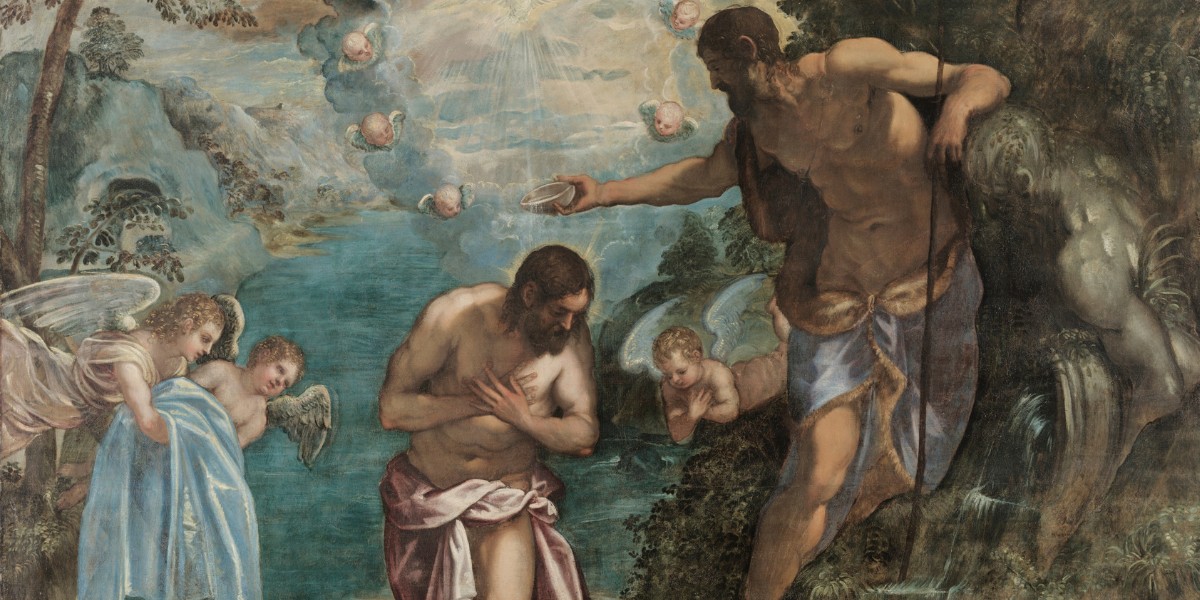
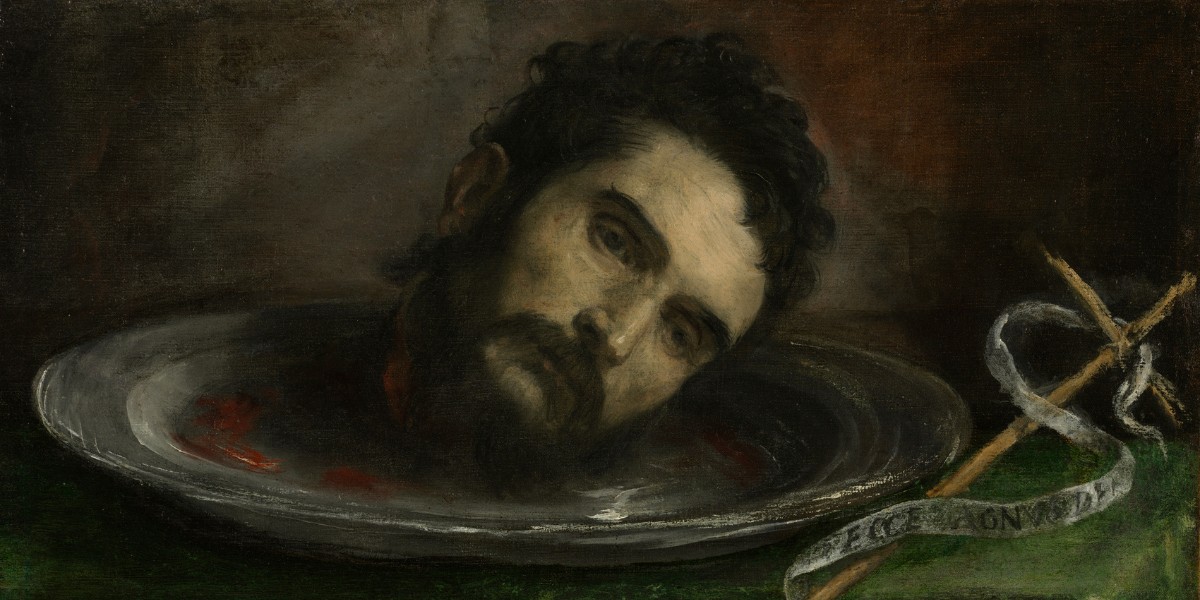
The holy Apostle Andrew was born in Bethsaida and was the son of Jonah and the brother of the holy Apostle Peter. Like his brother Peter, he was a fisherman. The Gospel of John states that the Apostle Andrew was first a disciple of Saint John the Baptist. It is possible that he was even present at the baptism of the Lord. At the call of the Forerunner, he followed Jesus: “The next day John was standing with two of his disciples, and he looked at Jesus as He walked by and said, ‘Behold, the Lamb of God!’ The two disciples heard him say this, and they followed Jesus. Jesus turned and saw them following and said to them, ‘What are you seeking?’ And they said to Him, ‘Rabbi’ (which means Teacher), ‘where are You staying?’ He said to them, ‘Come and you will see.’ So they came and saw where He was staying, and they stayed with Him that day, for it was about the tenth hour. One of the two who heard John speak and followed Jesus was Andrew, Simon Peter’s brother. He first found his own brother Simon and said to him, ‘We have found the Messiah’ (which means Christ). He brought him to Jesus” (John 1:35–42).
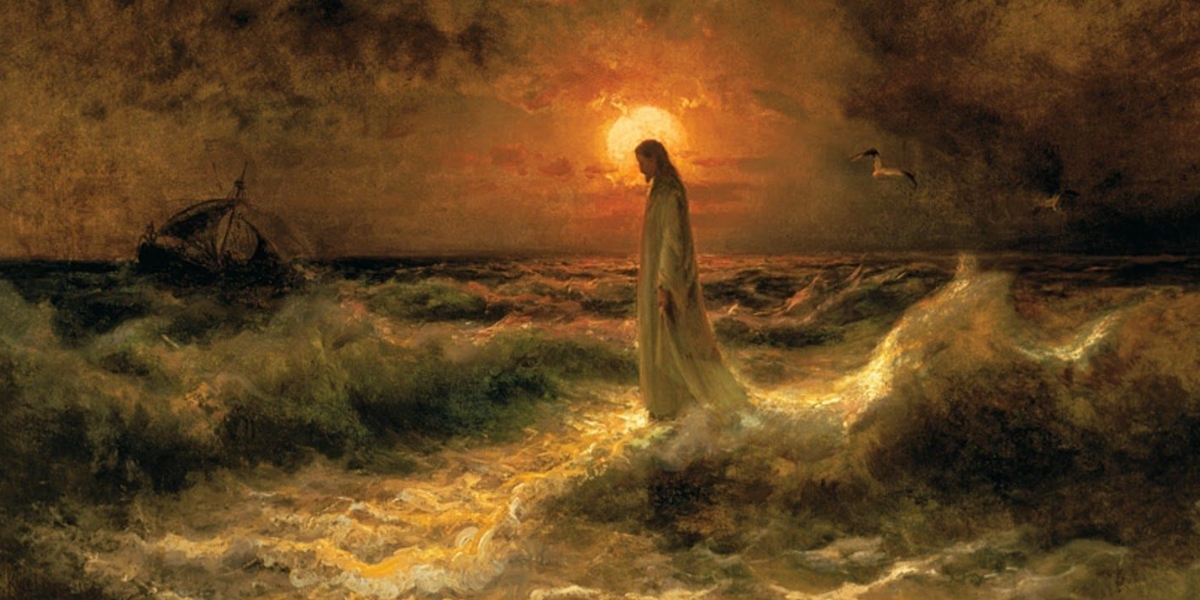
Based on the information in this passage, the Apostle Andrew is called the First-Called. In the Gospels of Matthew, Mark, and Luke, the Lord’s meeting with Andrew and Simon Peter is also described on the shore of the Sea of Galilee:
“As Jesus was walking beside the Sea of Galilee, He saw two brothers, Simon called Peter and his brother Andrew. They were casting a net into the lake, for they were fishermen. ‘Come, follow Me,’ Jesus said, ‘and I will send you out to fish for people.’ … At once they left their nets and followed Him” (Matthew 4:18–20; see also Mark 1:16–18; Luke 5:1–11).
In the Gospel of John, the name of the Apostle Andrew is mentioned again in the account of the miraculous feeding of the five thousand with five loaves and two fish. Andrew told the Lord about the boy who had these loaves and fish.
In the Gospels, Peter’s directness and straightforwardness often overshadow Andrew’s presence, but the attentive reader sees that Andrew was one of the Lord’s closest disciples; he carried the good news of Christ to people until the last day of his life and accepted a martyr’s death for his witness to the faith.
After the descent of the Holy Spirit at Pentecost, the apostles, remembering Christ’s command to bear witness to Him “to the ends of the earth,” cast lots to determine where each should go. Andrew’s lot fell to preach the Gospel in the city of Byzantium and in Thrace (the territory now comprising the northeastern part of Greece, southern Bulgaria, and northwestern Turkey). The Apostle Andrew converted many people to Christ in various countries. In Byzantium he ordained Saint Stachys as bishop. Later the Apostle Andrew preached in the lands along the Danube, in the Black Sea regions (present-day Ukraine and southeastern Russia). According to tradition, he traveled far north, as far as the lands of ancient Novgorod. On the banks of the Dnieper he stopped to rest at the foot of the green hills of present-day Kyiv and said to his disciples: “The grace of God will shine upon these hills; here there will be a great city; the Lord will raise up many churches here, and all Rus’ will be enlightened by Holy Baptism.”
It is also known that the Apostle Andrew brought the good news to Epirus in western Greece and to the Peloponnese, where he preached, performed many miracles and healings, and accepted death for Christ in the city of Patras.
The Apostle arrived in Patras, and soon his grace-filled preaching bore abundant fruit: most of the townspeople turned to Christ. By his prayers the sick and possessed were healed in the name of the Lord Jesus Christ. In his presence people burdened with sorrows and misfortunes were calmed and comforted, and Christians were strengthened in faith. Near the seashore not far from Patras there was a leper colony, and when the lepers heard the preaching of the Apostle Andrew, they believed and were healed. One of them, a man named Job, followed the saint and everywhere loudly proclaimed how great is the God of the Christians.
In Patras there lived a Roman proconsul named Aegeates, whose wife Maximilla suffered from a severe eye disease and was near death. The proconsul had no hope that she could recover. One of the proconsul’s household, who knew the Apostle Andrew, begged him to come and lay hands on her. The holy Apostle Andrew came, prayed over her, and she was immediately healed. Aegeates, seeing this, brought a huge sum of money and laid it at the Apostle’s feet, but the Apostle Andrew replied: “Our Lord and Teacher said, ‘Freely you have received; freely give’” (Matthew 10:8), and refusing the money, he taught the proconsul the foundations of the faith.
The former idol-worshippers — the inhabitants of Patras — began breaking the statues of the gods they had worshipped in the city temples and collecting funds for the Apostle and his followers. Saint Andrew continued to refuse all gifts, asking that they be distributed to the poor. The wealthy citizens of Patras donated large sums for the church.
Soon after Maximilla’s healing, the proconsul went to Rome to meet Emperor Nero and decided to leave his brother Stratocles, a famous Athenian mathematician, in Patras in his place during his absence. Stratocles set out from Athens to Patras, but on the way one of his servants, whom Stratocles loved as a brother, was attacked by demons — he began to suffer fits and tremors for no natural reason. The servant was shown to doctors, but they could do nothing, and Stratocles grieved greatly. When they arrived in Patras, Maximilla told him of her healing. She advised him to turn to the Apostle and ask for his prayers. Stratocles called upon the Apostle Andrew, and the Apostle healed the servant, after which both Maximilla and Stratocles renounced paganism and were baptized. The proconsul returned from Rome, but the miracles of healing in his own family did not move him to renounce the pagan gods, since his position did not allow him to abandon idolatry. After many attempts to convert him, Maximilla declared that if he preferred to remain a pagan, she could no longer live with him as his wife.
Aegeates, enraged, ordered the Apostle Andrew to be thrown into the palace prison. That same night Stratocles and Maximilla came to him, and he spoke with them for a long time, then laid hands on Stratocles and ordained him bishop of Patras. Meanwhile, a great crowd gathered outside the walls intending to storm the prison, kill the proconsul, and free the Apostle. When this plan was told to the Apostle Andrew, he forbade the use of force, reminding the newly converted citizens that a Christian should not fear earthly sufferings and death, but should imitate the meekness of the Lord Himself.
The next day Aegeates ordered the Apostle to be brought before him and said that if he refused to sacrifice to the Roman gods, he would be crucified. The Apostle Andrew firmly refused, asking only that he not be crucified in the same manner as the Lord. Then the proconsul ordered him to be crucified head downward on a cross shaped like the letter X and not to nail his hands to the cross, but to tie them, in order to prolong his torment.
When the holy Apostle Andrew was led to the cross, he cried out: “Rejoice, O Cross, consecrated by the flesh of Christ… Until the Lord was crucified upon you, you were terrible to men; now men love you and receive you with joy, for the faithful know what joy you contain and what reward is prepared for you… Take me from among men and give me to my Teacher, that through you He who redeemed me by you may receive me.”
The Apostle was bound to the cross, and a crowd of twenty thousand people gathered around. Among them was Bishop Stratocles, the proconsul’s brother. He cried out with the crowd: “This righteous man suffers unjustly.” With these cries the people headed toward the proconsul’s palace, and he, fearing the people’s anger, agreed to go with them and take the Apostle down from the cross.
But when the Apostle Andrew saw the proconsul approaching, he cried out to him: “Why have you come, Aegeates? If you wish to become a Christian, the gates of heaven will open to you, as I promised you before. But if you have come only to take me down from the cross, I do not wish to be taken down alive. I already see my King and my God, I already worship Him, I already stand before Him. My soul grieves only for you, for I know what eternal destruction awaits you. Take care of yourself while there is still time; do not postpone repentance until the day when repentance will no longer be in your power.”
Nevertheless, Aegeates, fearing the crowd’s anger, ordered his soldiers to take the Apostle down from the cross. But as soon as they touched the cross, their hands became numb and hung like whips. The saint cried out again: “Lord Jesus Christ, do not allow me to be taken down from the cross on which I am hanged for Your name, but receive me, my Teacher, Whom I have loved, Whom I have known, Whom I have confessed, through Whom I have become what I am. Receive me, good Teacher, and do not command me to be taken down from the cross before You receive my spirit.”
When he said this, a heavenly light shone upon him, visible to all. The light was so bright that people had to cover their eyes with their hands. About half an hour later the light faded, and the holy Apostle gave up his spirit to the Lord. Maximilla and Stratocles took his body down from the cross. Maximilla anointed the body with precious ointment and placed it in a tomb that could have become her own resting place, had the holy Apostle Andrew not delivered her from death by his prayers. The Apostle Andrew accepted a martyr’s death in 67 AD.
Aegeates, indignant at the steadfastness and devotion of the people of Patras to the Christian faith, planned revenge. He decided to accuse his wife Maximilla before the emperor. But he did not succeed in carrying out this treacherous plan — a demon entered him, and he died in a fit of rage on one of the central streets of the city. Stratocles, learning of his death, ordered all his money and property to be distributed to the poor. Maximilla also gave away most of her wealth. Both Maximilla and Stratocles later peacefully departed to the Lord.
Saint Jerome writes that the relics of the Apostle Andrew (as well as the relics of the Apostle Luke, buried in Thebes) were transferred from Patras to Constantinople in 356 by order of Emperor Constantius, son of Constantine the Great. The relics were accompanied by Saint Artemius the Great Martyr, former commander of Emperor Constantine’s army. They were placed in the Church of the Holy Apostles in Constantinople. Later, the right hand of the holy Apostle Andrew was taken to Moscow. In 1208 the Crusaders took the relics from Constantinople to Italy, where they long rested in the Church of the Apostle Andrew. In the fifteenth century his head was transferred to Rome, and the head of the Apostle Peter — to the Vatican. In 1964 Pope Paul VI, as a gesture of goodwill, returned the head of the holy Apostle Andrew to the Orthodox Christians of Greece.
According to some accounts, the custom of placing an X sign on letters, symbolizing the holy kiss, originated from the disciples of the holy Apostle Andrew. After his martyr’s death they placed such a sign on their letters and documents, kissing the cross in memory of his sacrifice.