


Biblical prophecies are predictions of events recorded in the Bible, given on behalf of God, uttered by special personalities, prophets, and intended for other people. In the broadest sense of the word, prophecy in the Bible is considered not only the prediction of the future, but also any statement of the truth transmitted by God to people through the prophets (chastisement, instruction). The Bible also contains references to predictions of the future coming from false prophets. False predictions in the Bible were also called "prophecies" (in a sense close to fortune-telling) and contacting soothsayers and fortune-tellers was strictly prohibited.
The prophecies concerned specific peoples, states, cities, personalities, etc. In particular, prophecies were given about the Messiah who was about to come.
From the point of view of Christians and Jews, all biblical prophecies have either been fulfilled or will be fulfilled in the future, which they consider as proof of the infallibility and inspiration of the Bible. From the point of view of skeptics, the biblical prophecies either did not come true, or were initially formulated in an ambiguous form that makes it impossible to judge their fulfillment or non-fulfillment. However, it is obvious that even the exact fulfillment of prophecies from the point of view of skeptics can only be an example of foreseeing historical events or just a coincidence.
Classification of prophecies
Predictive and non-predictive prophecies
Although the main use of the term "prophecy" in both Hebrew and Greek is related specifically to predicting the future, not all prophecies are predictive. Some of them are simply inspired statements about the events of the present or the past, or inspired glorification.
Conditional and unconditional prophecies
Conditional prophecies are those whose fulfillment depends on the fulfillment of certain conditions. Most of the prophecies of the Bible are unconditional.
Symbolic and non-symbolic prophecies
Some of the prophecies set out the prediction in symbols, but the main part are direct predictions that do not require decoding.
The subject of prophecies
Messianic prophecies are the prophecies of the Old Testament (Tanakh) about the Messiah. In the Jewish tradition, Messianic prophecies include those that speak of the Messiah as the reigning king of Israel. In the Christian tradition, the prophecies of the Old Testament are attributed to the Messianic ones, mainly about the first coming of Christ, which in the Jewish tradition are not attributed to the Messianic ones.
Eschatological prophecies are the prophecies of the Old and New Testaments about the "events of the last days", the events of the beginning of the Last Judgment, the second coming of Christ, the coming of the Antichrist, Armageddon and related events.
The Prophets in the Bible
In the Bible, the prophets were seen as intermediaries in conveying God's message to people. These were not people with supernatural abilities, but ordinary people of different backgrounds who had been chosen by God for prophetic ministry. In the Old Testament times, the priesthood of the Jews was inherited, and people were called to prophetic ministry by God individually.
During their ministry, the Jewish people were in spiritual decline, disregard for the Law of Moses became widespread, and pagan superstitions and their way of life were easily assimilated. Therefore, the main task of the prophets was to return the Jewish people to their God, who had brought them out of Egypt and to His Law. The prophets severely rebuked sinners, regardless of their position in society (ordinary people, priests, kings). Chastisements and warnings are also addressed to neighboring nations. Closely related to the condemning and warning sayings of the prophets are their predictions about the future of Israel and the surrounding States and peoples.
By origin, the prophets came from a wide variety of backgrounds. According to the Bible, the Lord chose the prophets not based on their social background, but on their spiritual qualities. For example, the prophets Hosea and Amos were from the common class, and the prophets Isaiah, Zephaniah and Daniel were from high society, and the prophets Ezekiel and Habakkuk were from priestly origin.
The Early Prophets
For the first time in the Bible, the word "prophet" is used to refer to Abraham (Genesis 20:7), although nowhere is it mentioned that Abraham predicted the future. Like other characters in the Bible called prophets, the patriarchs were viewed as people through whom God transmitted not only prophetic predictions, but also words of edification, chastisement, and consolation. Such prophets include the patriarchs of the Pentateuch (Torah), such as Noah, Abraham, Isaac, Jacob, and Moses and his brother Aaron. In Christianity, the prophets include Enoch, whose prophecy is mentioned in the New Testament (Jude:14,15).
The early prophets of the historical books (in the Jewish tradition, the Early Prophets) of the Bible include Samuel, Nathan, Elijah, Elisha, besides them there are many other prophets mentioned in the Bible.
The Late Prophets
Only the books of the later prophets are actually prophetic. At the same time, in Christianity, the book of Daniel is among the prophetic ones, which is not considered as such in the Tanakh and is included in another section. — The Scriptures.
Traditionally, according to the volume of the legacy (the volume of the book), the biblical prophets are divided into two parts:
The Great Prophets: Isaiah, Jeremiah, Ezekiel and Daniel (only in Christianity);
Minor Prophets: Joel, Jonah, Amos, Hosea, Micah, Nahum, Zephaniah, Habakkuk, Obadiah, Haggai, Zechariah, Malachi.
Ways to receive and transmit prophetic messages

Hagar in the Desert (Gheorghe Tattarescu, 1870)
The Bible describes several ways to convey the prophetic message to the prophet or directly to people. Among them, theologians identify the following basic forms of transmission of the message::
1 - the transmission of the message during a person's direct communication with God in a visible form, during the so-called epiphany (theophany);
2 - "a voice from heaven", (Hebrew. — Bat Kol, lit. an echo, an echo) — transmission of the message from God in voice form only;
3 - Revelation through vision;
4 - Revelation through a special dream;
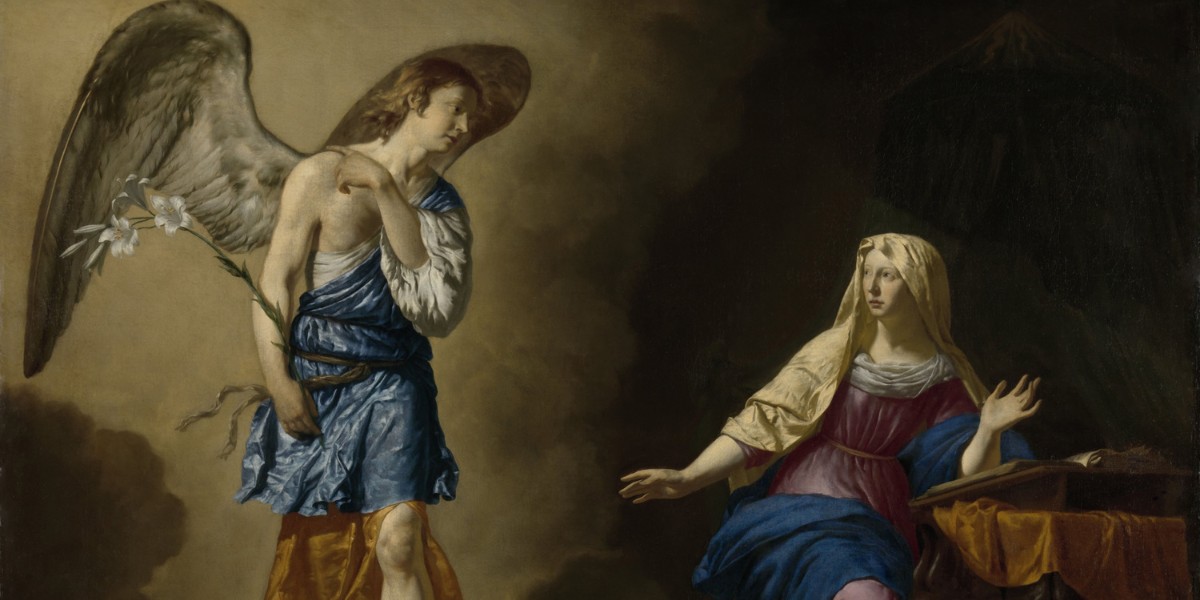
5 - Transmission of the message through the angel;
6 - the special effect of the Holy Spirit on the human mind.
In turn, the prophet conveyed this message to other people in oral or recorded form.
In some cases, the transmission of prophecy took place through certain symbolic actions of the prophets, the so-called "visual or visible prophecy" Some prophecies were an example of these actions Ezekiel — the symbolic siege of the city (Ezekiel 4:1-3), Jeremiah — the breaking of the jar (Jeremiah 19:10-13).
Prophesying and ecstatic state
Receiving and transmitting the prophetic message in the Bible had nothing to do with any special ecstatic state of the prophets. The prophets received this message in a conscious state (unless it was prophesying through a dream) and in a normal emotional state (although the very fact of receiving the revelation had an emotional effect on them). This distinguished the biblical prophets from pagan and occult soothsayers, who entered a special ecstatic state and did not understand what they were saying during this trance.
Such behavior of false prophets is mentioned in the Bible. The behavior of the prophets of Baal is characterized as "demonic," they shout loudly, calling for Baal, and stab themselves with knives and spears.:
26 And they took the calf that was given them, and prepared it, and called on the name of Baal from morning until noon, saying, Baale, hear us. But there was no voice, no answer. And they leaped at the altar that they had made. 27 At noon, Elijah began to laugh at them and said: Shout with a loud voice, for he is a god; maybe he is lost in thought, or busy with something, or on the road, or maybe he is asleep, so he will wake up!
28 And they began to shout with a loud voice, and stabbed themselves with knives and spears, according to their custom, so that the blood flowed over them.
29 It was noon, and they were still raging until the time of the evening sacrifice; but there was no voice, no answer, no hearing.
— (3 Samuel 18:26-29)
A similar difference was pointed out by theologians even in early Christianity. In particular, John Chrysostom wrote about this.:
"From this we learn something else, namely that the prophets were not like (pagan) soothsayers. For those, when the devil took possession of their soul, their minds blinded and darkened their thoughts, and they uttered everything in such a way that their minds did not understand what was being uttered at all, as if some soulless flute were making sounds. This was confirmed by one of the philosophers in the following words: "soothsayers and fortune-tellers, although they talk a lot, do not understand at all what they are saying" (Plato in the Apology of Socrates and in conversation: Menon). But this is not how the Holy Spirit works, but on the contrary, He leaves the understanding of what is spoken to the heart."
"it is typical for a fortune-teller to be in a frenzy, carried away, and raging like a demon possessed; but a prophet is not like that: he says everything with a sober soul and a healthy mind, knowing or clearly understanding what he is saying; so distinguish between a prophet and a fortune-teller even before what they foretell is fulfilled."
Critical views on the possibility of supernatural revelation
From the point of view of representatives of the "higher biblical criticism" in bibliology, there was no revelation from God, and the prophets were either victims of self-deception, being in a state of inspiration, or consciously used the name of God for their own purposes, passing off their thoughts and ideas as revelations from God.
From the point of view of Orthodox theology, the proof of the reality of revelation is both the prophecy itself, which after a while comes true exactly with the predictions of the prophets, and the very life of the prophets, who by their sufferings and deaths proved the absence of selfish intentions in their activities.
Representatives of liberal theology often adhere to the point of view of the concepts of "higher biblical criticism" or, sharing a skeptical attitude towards everything supernatural (prophecies and miracles), they may not mention the prophecies of the Bible in their works, or they do not use them as topics for sermons, focusing their attention on the ethical or social side of religion.
Frequency and prevalence of prophetic revelations
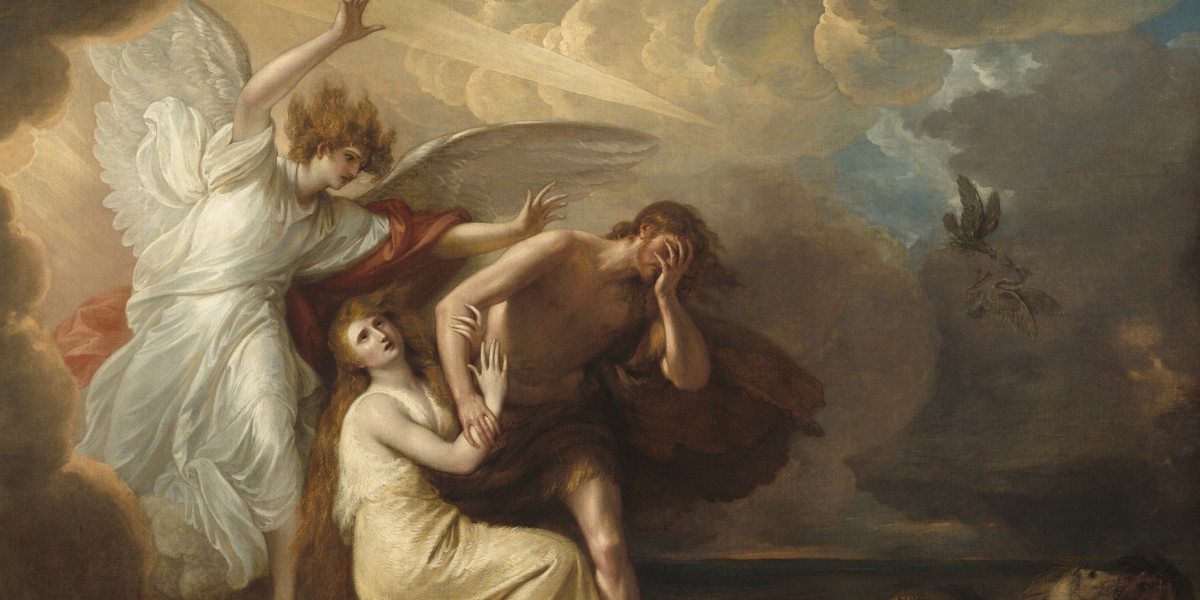
In the Bible, prophecy is considered as a special revelation of God to man. At the very beginning of the Bible, in the book of Genesis, it is said about the direct communication of God with man. Genesis chapter 3 describes the circumstances of man's fall and its consequences. Adam and Eve began hiding from God when, after the fall, they heard His voice in the Garden of Eden (Gen. 3:7-10). Feelings of fear and shame became a serious obstacle to God's communication with man, and after that, God personally revealed himself only to a small number of people, who were then to become messengers to other people. When, in some cases, God specifically manifested His presence, it brought many people into awe and they sought to avoid this communication. For example, when God proclaimed the Ten Commandments in Sinai with His voice, they turned to Moses in fear and asked him to be their mediator in communication with God.:
18 All the people saw thunders, and flames, and the sound of a trumpet, and a smoking mountain; and when the people saw it, they withdrew and stood afar off. 19 They said to Moses, "Speak to us, and we will listen, but do not let God speak to us, lest we die."
20 And Moses said to the people, "Do not be afraid; God has come to test you, and that his fear may be before you, so that you may not sin."
— (Exodus 20:18-20)
Moses is considered by many as the first example of a prophet in his traditional sense. But for the first time, Abraham was called a prophet, with whom God also spoke explicitly, "face to face." Moses did not claim to be the only mediator between God and people. When it was reported to Moses that others had also begun to prophesy in the camp of Israel, Joshua asked Moses to forbid it. To which Moses replied:
29 But Moses said to him, "Are you not jealous of me?" Oh, if only all of the Lord's people were prophets, if only the Lord would send His Spirit upon them!
— (Numbers 11:29)
The Apostle Paul gives a similar assessment of the gift of prophecy.:
1 Attain love; be jealous of spiritual gifts, especially of prophesying.
— (1 Corinthians 14:1)
29 And let two or three of the prophets speak, and let the rest reason. 30 But if there is a revelation to another of those sitting, then be silent to the first.
31 For you can all prophesy one by one, so that all may be taught and all may receive comfort.
— (1 Corinthians 14:29-31)
Many modern Christian theologians consider the word "prophecy" in the New Testament books to be synonymous with "preaching." But in these words of the Apostle Paul, other theologians see the connection of prophecy with revelation from above, and not with the fruit of their own reflections and with the knowledge that a person already possesses. In this case, prophecy is considered as new knowledge gained from the direct influence of the Holy Spirit, and not old knowledge, which is the fruit of knowledge. Some Christian theologians believe that in the post-Apostolic period, prophecy will no longer manifest itself in the church, while others, on the contrary, believe that the gift of prophecy will always manifest itself in the church, which possesses the truth and is guided by the Holy Spirit.
Prophetic Periods
Most of the prophecies in the Bible are not related to specific dates and time periods. But some of the prophecies contain references to time periods. Most of them are indicated directly in explicit form. Some prophetic periods were given in revelation first in symbolic form, and then they were translated into a time period when interpreted, for example, interpretations Joseph dreamed of Pharaoh's 7 years of plenty and 7 years of famine (Gen. 41:1-36).
In the Christian tradition, the canonical prophetic books of the Old Testament include the books of the so-called "great" and "small" prophets, including the book of Daniel and Lamentation of Jeremiah. In the Christian Bible, these books follow the so-called "teaching" and "poetry" books of the Bible.
Orthodox Bibles contain the following non-canonical texts among the prophetic books: The Epistle of Jeremiah, the book of Baruch, 7 non-canonical additions to the book of Isaiah, 5 additions to the book of Jeremiah, 3 additions to the book of Ezekiel, and 7 additions to the book of Daniel. Among Catholics, the book of Baruch is considered Deuterocanonical.
In the Greek, Slavic, and Russian Bibles, these books are placed in the following order (non-canonical books are marked with a *):
- Isaiah (Yesaiahu)
Jeremiah (Irmiahu)
The Lamentation of Jeremiah (Eich), in the Hebrew Bible is included in the Scriptures
The Epistle of Jeremiah*
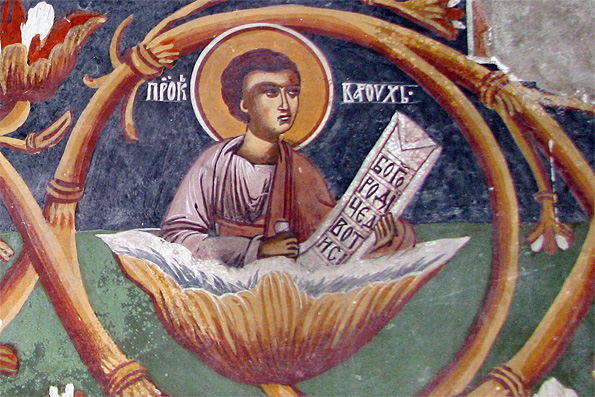
Baruch*
Ezekiel (Yehezkel)
Daniel (Daniel), in the Hebrew Bible is included in the Scriptures
Hosea (Hoshea)
Joel (Yoel)
Amos (Amos)
Obadiah (Ovadia)
Jonah (Jonah)
Micah (Micah)
Nahuma (Nahum)
Habakkuk (Havakuk)
Zephaniah (Zephaniah)
Haggai (Hagai)
Zechariah (Zechariah)
Malachi (Mala'hi)
In the Jewish tradition, the "Prophets" ("Nebuchadnezzar") section of the Bible includes most of the historical books according to the Christian classification (under the name "Early Prophets"): books The Book of Joshua, the Book of Judges of Israel, Samuel (1 and 2 Samuel), Kings (3 and 4 Samuel) and do not include the books of Daniel and Lamentation of Jeremiah. The Hebrew Bible contains prophetic books (in the Christian sense) The "Later Prophets" section is immediately followed by the "Early Prophets" section, and the "Scripture" section (which includes the Book of Daniel and Lamentation of Jeremiah) "after the Late Prophets." At the same time, the books of the 12 "Minor Prophets" are combined into one book.