

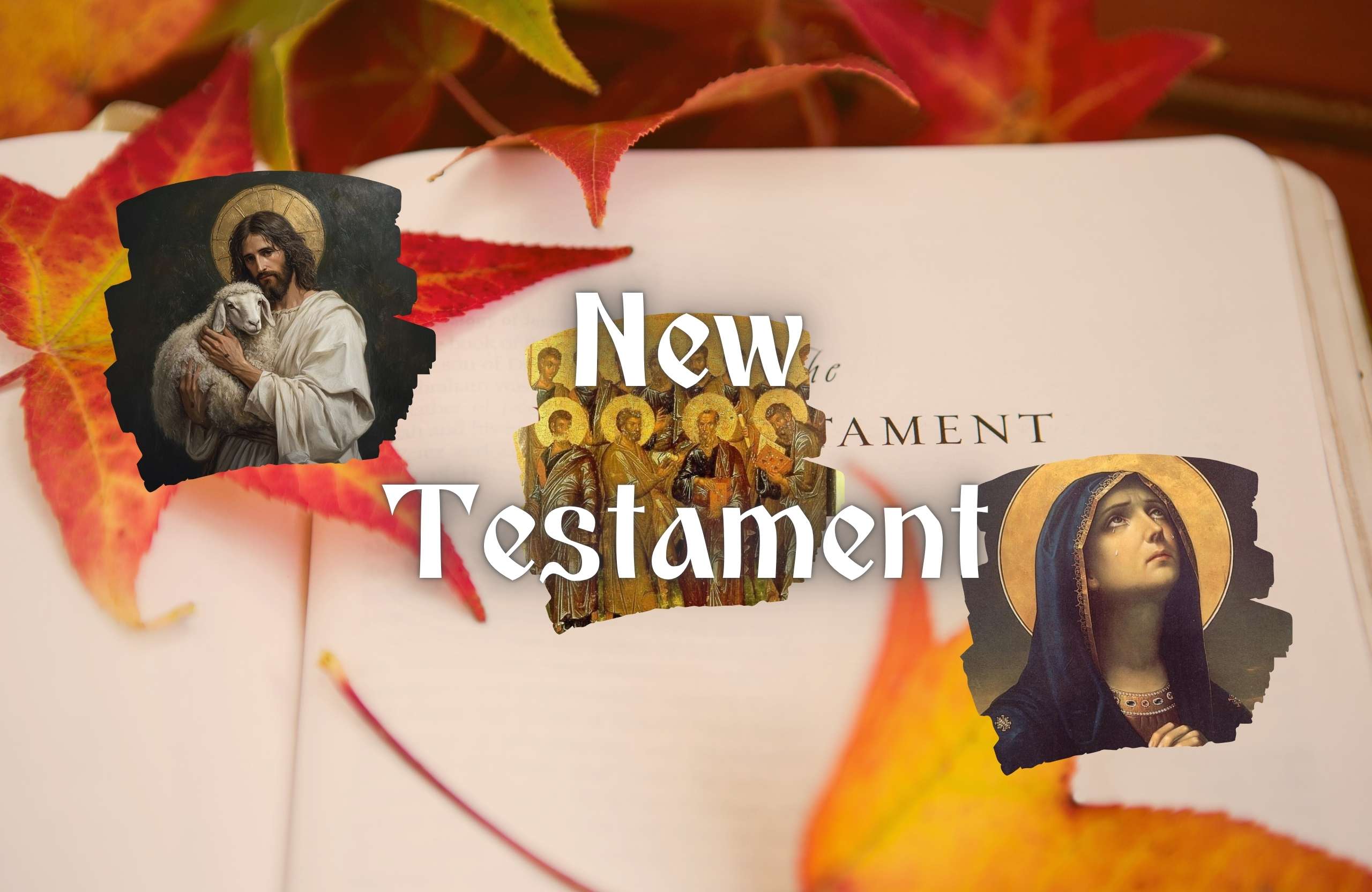
The very expression New Testament means that it is new not in contrast to the Old, but that it is always new. It is New in the sense that it will always remain so, it will never grow old, it simply cannot grow old. It is no coincidence that in ecclesiastical Latin the Greek phrase “New Testament” is sometimes translated not simply as “novum,” but as “novum et aeternum testamentum” (new and eternal!). For St. Irenaeus of Lyons, the main characteristic of Christianity was its novitas, that is, its inevitable newness, its perpetual unexpectedness.
If someone could read the entire Gospel every day, each day he would be reading a different book, because he himself is changing — including under the influence of reading the God-inspired text (this is the basis of the Church’s requirement for regular reading of Scripture).
It is said that one day an Orthodox priest met a street preacher from one of the Protestant denominations. “Would you like me to tell you about the church that is founded on the Bible?” — he joyfully offered. “And would you like me to tell you about the Church that wrote the Bible?” — the priest replied to him… By the time the last book of the New Testament, the Gospel of John, was completed, the Christian Church had already existed for more than half a century… Therefore, if we want to understand the Bible, we must turn to the Christian Church, for it is primary.
Holy Scripture is given to us by God not merely so that we may extract information from it, but so that we may live by it.