


Laws of Nature and Morality
God's Law is a guiding star that points the way for the wandering man to the Kingdom of Heaven. The significance of God's Law does not diminish with the centuries. On the contrary, the more life becomes complicated by contradictory human opinions, the more a person needs the clear and authoritative guidance of God's Commandments.
God's Law is a light that enlightens the mind and warms the heart. This is how people who thirsted to find the highest meaning in their lives looked upon it: “Your law is my comfort… How I love Your law! I meditate on it all day long. By Your commandment You have made me wiser than my enemies… Great peace have those who love Your law, and nothing causes them to stumble” — wrote the ancient righteous poets — King David and others (Ps. 118:77, 97–98, 165).
God's Commandments can be compared to the laws of nature: both have the Creator as their source and complement each other: some regulate soulless nature, others provide the moral foundation for the human soul. The difference between them is that matter unconditionally obeys physical laws, while man is free to obey or disobey moral laws. The granting to man of freedom of choice contains God's great mercy: this freedom gives man the opportunity to grow and be perfected spiritually, even — to become like God. However, moral freedom imposes on man responsibility for his actions.
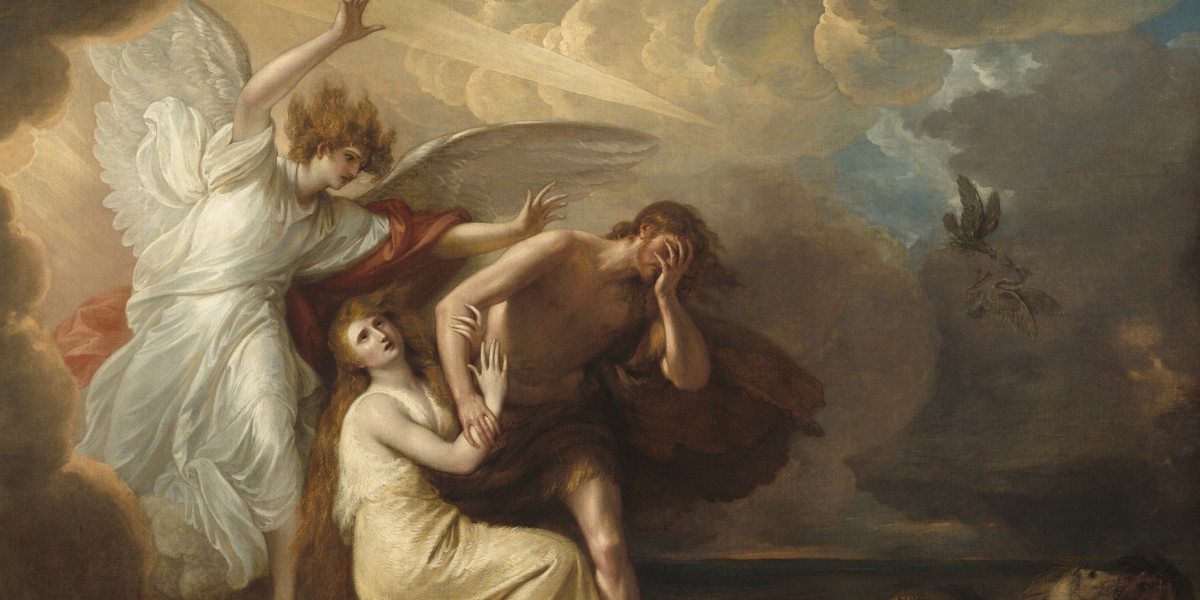
Conscious violation of God's commandments leads to spiritual and physical degeneration, slavery, suffering, and ultimately — to catastrophe. Thus, for example, even before God created our visible world, a tragedy occurred in the angelic world when the proud Lucifer rebelled against the Creator and, together with other angels, formed his own kingdom, which became a place of darkness and horror called hell. Another tragedy occurred in the life of humanity when our forefathers Adam and Eve violated God's commandment, as a result of which the infection of the sin of disobedience passed to their descendants, and the life of people was filled with crimes, sufferings, and misfortunes. Catastrophes of lesser scale include the global flood as punishment for Noah's contemporaries; the destruction of the cities of Sodom and Gomorrah; the destruction first of the Israelite, and then of the Judean kingdom under Nebuchadnezzar and, the second time, in 70 CE; the fall of the Byzantine and Russian empires and many other disasters that befall countries for the sins of their people.
Continuing to compare the laws of nature with God's Commandments, it must be said that the laws of nature are temporary and conditional: they appeared together with the physical world and, probably, will cease to exist with it. (This is the opinion of some modern scientists). Moral laws, however, are eternal. They contain the basic moral norms that are unchanging, because they reflect the essence of the eternal and unchangeable Creator.
The foundations of the moral law were laid by the Creator in the very spiritual nature of man. We feel this law within ourselves every time our conscience tells us what should and should not be done. Comparing the moral law in the human soul with the law in Holy Scripture, we see that they have the same content: God's Commandments in concrete verbal form confirm what our heart is told by the inner feeling called conscience.
In this brochure we will talk about the Ten Commandments of God, which lie at the foundation of all legislative systems, both ancient and modern. We will briefly tell about the circumstances under which these commandments were given and reveal their significance in the life of a Christian.