







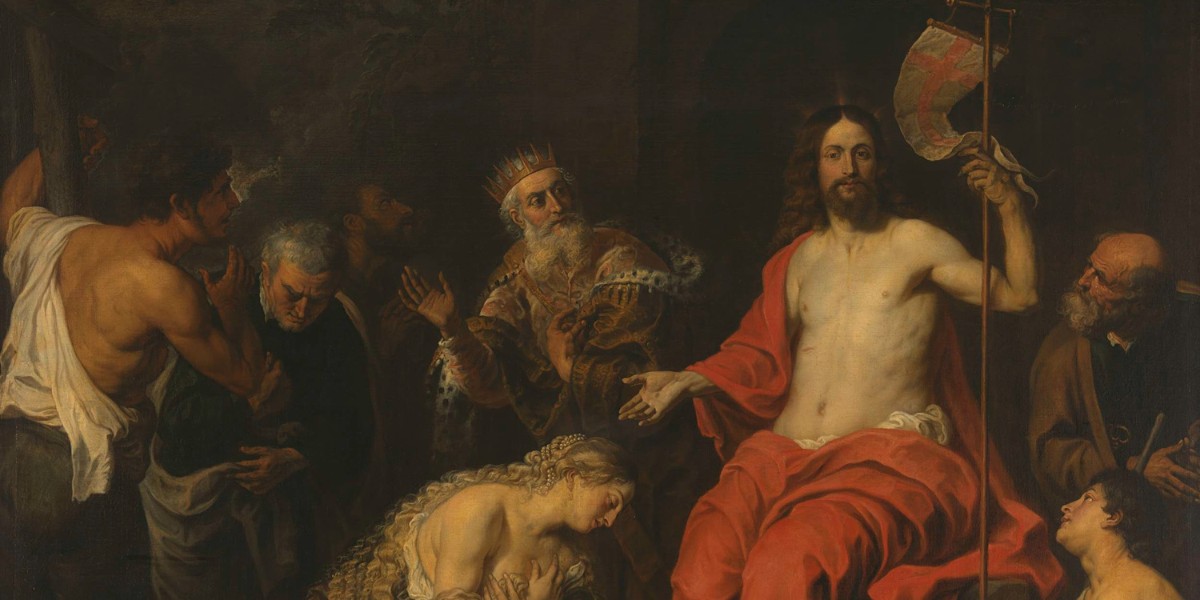
Explanation of the Ninth Beatitude
“Blessed are you when they revile and persecute you, and say all kinds of evil against you falsely for My sake. Rejoice and be exceedingly glad, for great is your reward in heaven, for so they persecuted the prophets who were before you” (Matthew 5:11–12).
These words refer to the ninth Beatitude. They should be understood as follows. If a person, because of faith in Christ and a righteous life in Christ, is subjected to persecution, reviling, slander, and abuse, and if he endures all this patiently, then such a person awaits a great, the highest reward in heaven (that is, a very high degree of eternal blessedness).
From the time of his fall, Satan has waged an irreconcilable war against Good, Holiness, Light, and Christ’s Righteousness, using against Jesus Christ lies, slander, evil deeds, temptations, and persecutions. No one among people was subjected to such cruel and undeserved mockery and slander as Jesus Christ. After Christ’s ascension, the struggle against Christ and His teaching continues even now. In all times and in our time, Satan and his minions (both among the spirits of darkness and among people) continue to revile the name of Christ and His disciples and followers. It is about these humiliations and oppressions to which adherents of Christ’s teaching will be subjected that Christ speaks, advising to take “as an example of suffering and patience” (James 5:10) the prophets who served the Lord and spoke in His name.
Abel, who showed devotion and favor to the Lord, perished innocently as a martyr. Enoch walked “before God” (Genesis 5:24), but people did not want to listen to him. Noah, who was mocked as a fanatic raising a false alarm, demonstrated steadfastness and courage. For Christ’s righteousness, the first Christians and martyrs endured much oppression and slander during the establishment of Christianity and in subsequent times. But the persecutions of the martyrs only contributed to the spread of Christianity. For people, struck by the feat of patience and forgiveness of the Christians, began to come to know Christ’s teaching. And in our time, reviling and persecution for faith and Christ’s righteousness exist. They will continue until the end of the age, because Satan is not yet bound, and he rages even more fiercely against people who hold to the right faith and righteous life in Christ. But now the evil spirit most often manifests its opposition not through torture and executions, but through inciting unbelief or spreading false religious teachings and sectarianism, blasphemy, slander, inflaming pride, egoism, depravity, vanity, awakening the desire for acquisitiveness, greed, wealth, power, conformism, and careerism, striking at the philosophical-religious sphere, tempting man from the side of sensual-sinful pleasures and passions.
“Pious people today are called hypocrites, backward people with narrow views; the Christian faith is called the faith of the rabble; Christian compassion is called weakness of spirit, almsgiving is called foolish extravagance, outward prayer is called hypocrisy, the delight and joy of prayer is almost called madness. On the contrary, broad licentiousness of the flesh, dissoluteness, indulgence of all its countless lusts — this is called modern progressiveness” (“Spiritual Sowings,” compiled by Archpriest, Master of Theology G. Dyachenko, 4th edition, 1900, p. 315).
However, the Lord does not abandon people who suffer for His sake, but strengthens their souls and steadfastness. “If you are reproached for the name of Christ, blessed are you, for the Spirit of glory and of God rests upon you” (1 Peter 4:14). In response to reviling for Christ’s righteousness, Christ offers His adherents to rejoice and be glad, because a great reward awaits them. “In this you greatly rejoice, though now for a little while, if need be, you have been grieved by various trials, that the genuineness of your faith, being much more precious than gold that perishes, though it is tested by fire, may be found to praise, honor, and glory at the revelation of Jesus Christ, whom having not seen you love. Though now you do not see Him, yet believing, you rejoice with joy inexpressible and full of glory” (1 Peter 1:6–8).
True Christian joy has nothing in common with earthly pleasures or enjoyments. This is the highest religious feeling — incomparable joy in faith. “Now may the God of hope fill you with all joy and peace in believing, that you may abound in hope by the power of the Holy Spirit” (Romans 15:13).
The joy of knowing God’s love. “As the Father loved Me, I also have loved you; abide in My love. If you keep My commandments, you will abide in My love, just as I have kept My Father’s commandments and abide in His love. These things I have spoken to you, that My joy may remain in you, and that your joy may be full” (John 15:9–11).
Christian joy is inseparably connected with spiritual suffering. Those are mistaken who think that joy comes after suffering. No, joy in Christ comes simultaneously with suffering in Christ and is expressed in the feeling of joy, because you are worthily “partaking of Christ’s sufferings” (1 Peter 4:13).
Christian joy and suffering are inseparably linked with each other, depending on one another and coexisting indivisibly. Just as sorrow over sin arises together with joy connected with the fact that sin can be overcome, atoned for, and salvation received, so also the trial of sufferings evokes joy over the fact that for these sufferings a person will be granted great salvation. Therefore the Apostle James calls Christians: “My brethren, count it all joy when you fall into various trials, knowing that the testing of your faith produces patience. But let patience have its perfect work, that you may be perfect and complete, lacking nothing” (James 1:2–4).
The Apostle Paul expresses the same thought: “We also glory in tribulations, knowing that tribulation produces perseverance; and perseverance, character; and character, hope. Now hope does not disappoint, because the love of God has been poured out in our hearts by the Holy Spirit who was given to us” (Romans 5:3–5).
Thus, the spiritual joy of Christians is the joy of martyrs, which proves the truth of the Christian faith and adherence to Christ’s teaching. For enduring reviling, persecution, and slander for Jesus Christ, the righteous man awaits a great reward in heaven. According to Christian understanding, the righteous man on earth is deprived of all blessings, but endures reviling and persecution for Christ. For this, in heaven the righteous man receives “incorruptible glory, an incorruptible crown, an inexhaustible treasure, unceasing joy, an endless kingdom, which the Lord will give” (Complete Works of Archpriest John Sergiev, vol. 1, p. 224). The righteous man, being a partaker of Christ’s sufferings, will also be a partaker of His glory.
Therefore, at a time when people strive for earthly blessings, Jesus Christ directs their thoughts toward heavenly recompense. And this recompense begins already in a person’s earthly life. The Lord said to Abraham: “I am your shield; your reward shall be very great” (Genesis 15:1), indicating by these words that for doing good deeds and living righteously the Lord always helps people and cares for them.